Nonadherence to treatment is a major barrier to achieving optimal health outcomes and imposes substantial costs on healthcare systems. It is often detected only after treatment has been compromised.
Our clients need a disease-agnostic, validated tool that identifies patients at risk of nonadherence and helps them understand the behavioural drivers underlying that risk.
We developed and validated TARA™ (Treatment Activation and Adherence Risk Assessment), an evidence-based behavioural segmentation tool underpinned by the Perceptions and Practicalities Approach (PaPA™), a behavioural framework endorsed by NICE as best practice for supporting medication adherence.
TARA™ was validated using data from 789 adults with long-term conditions receiving prescription medication across multiple therapeutic areas, including cardiovascular disease, diabetes, respiratory disease, rheumatology and oncology.
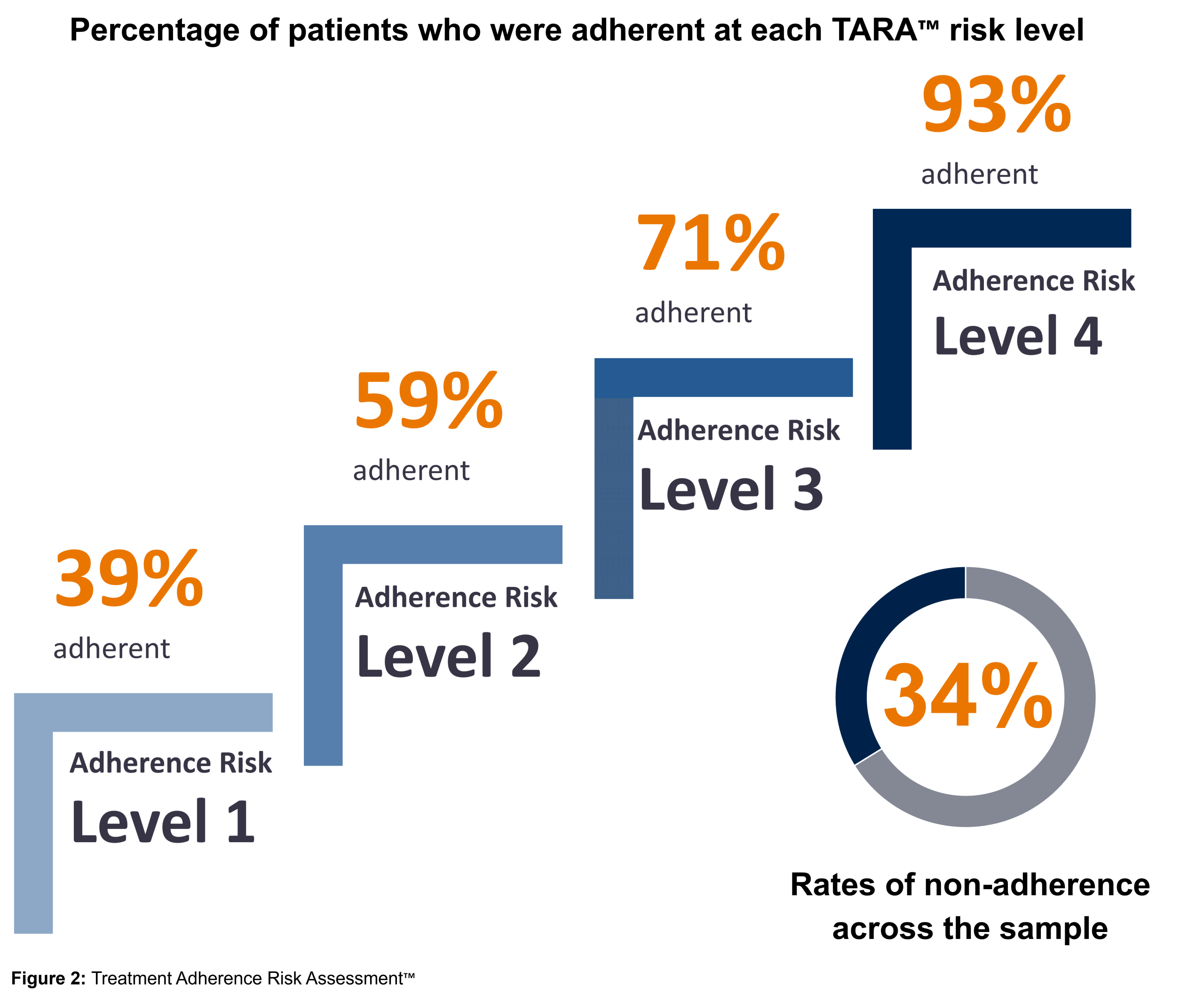
TARA™ successfully stratified patients into four distinct adherence risk groups.
These findings demonstrated that TARA™ could reliably distinguish between different levels of adherence risk.
Consequently, TARA™ was adopted in a number of large-scale GLP1 clinical studies to identify participants at risk of poor adherence or early withdrawal.
Using TARA-Activate™, we can subsequently propose behaviourally informed interventions that keep patients engaged during trials or whilst in treatment.