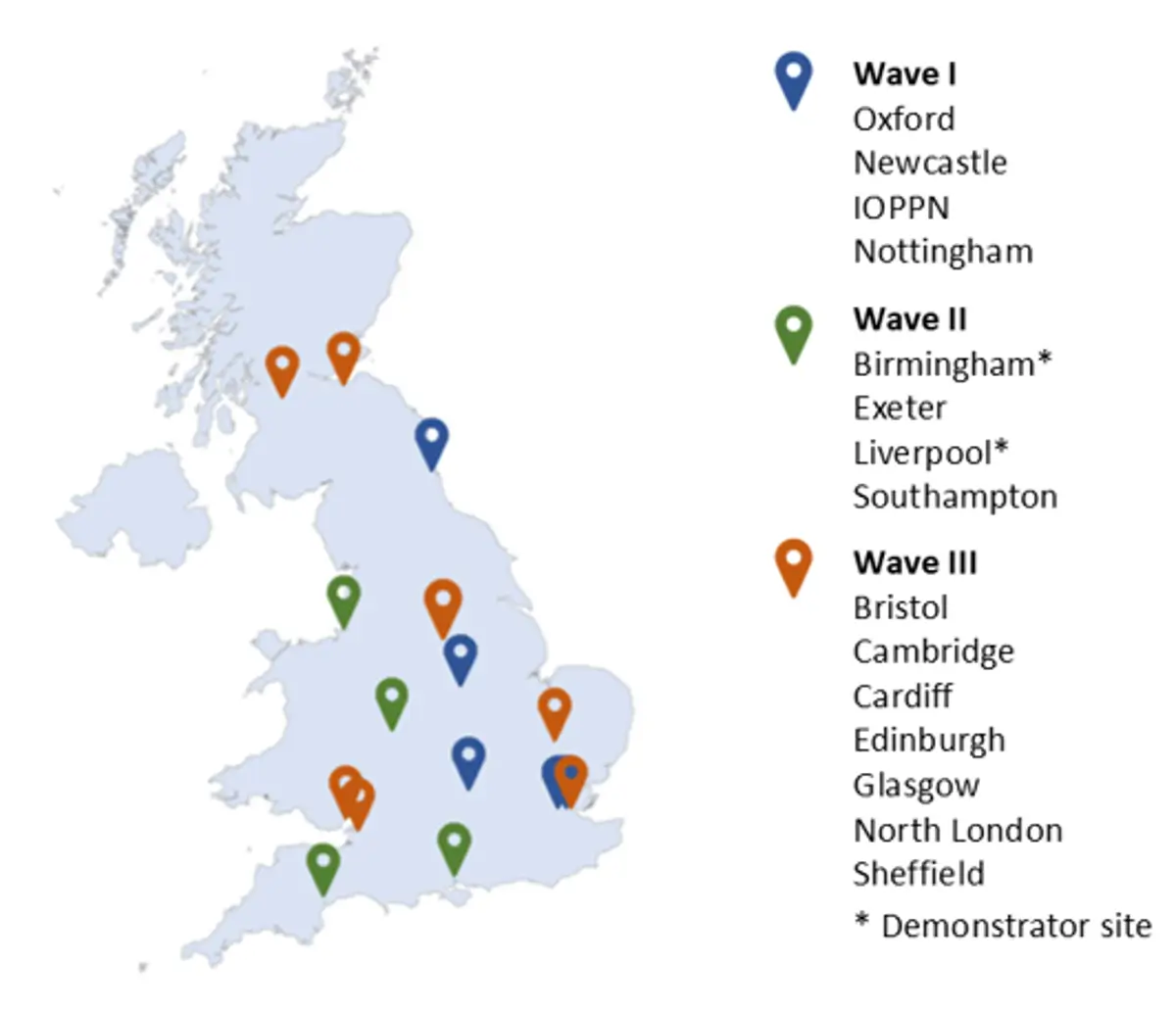
Within the UK, there are limited clinical pathways by which patients with treatment resistant depression (TRD) / difficult-to-treat depression (DTD) can access specialist care.
There are generally limited and, in many areas, no opportunity for patients to access mood disorder research clinics. Research is associated with higher quality care and, in the long term, allows for the development and refinement of better treatments for people with TRD/DTD.
MARS™, a tool developed by Personia, has been adopted as the national healthcare setting adherence measure in a UK-wide national programme to develop a co-ordinated network of research-focussed mood disorder treatment clinics.
The research aims to understand why some people respond to treatment and others do not, using markers of clinical symptoms, demographic information, cognitive function, genetic sequence information (genomic), chemical measures of metabolism (metabolomic), protein makeup (proteomic) and the body’s natural defence system (immune/inflammatory markers) together with collections of cells.
Findings from this important nationwide study will facilitate new research to drive improvements in diagnosis and treatment of mood disorders that may be proving difficult to treat.